Author: DC Homes

Open Concept Is Dead? Rethinking Floor Plans in Columbus Homes

The kitchen-living room wall came down years ago. Now a lot of homeowners are asking a new question: do we need some separation again?

Why Open Concept Took Over

Open concept became the default for a reason. Many Columbus homes built from the 1960s through the 1990s had compartment-style rooms. Kitchens were boxed in. Sightlines were limited. Family life happened behind doors.

Open layouts solved several problems at once:

  • Better sightlines between kitchen, dining, and living areas
  • More natural light flowing through the main level
  • Easier entertaining and a “bigger” feel without adding square footage

For growing families, it also made day-to-day life easier. You could cook and still keep an eye on kids. You could talk while prepping dinner. You could host without shuffling people room to room.

What Changed

A lot of households started using their homes differently. More work calls. More online school. More overlapping schedules. More people doing different things in the same time window.

That is when some open layouts started to feel less like “flow” and more like “everything happens in one giant room.”

The Tradeoffs People Notice Now

Open concept can still be a great fit. It just comes with tradeoffs that some homeowners did not think about during the first wave of wall removals.

Common complaints include:

  • Noise: calls, TV, appliances, and conversation stack on top of each other
  • Visual clutter: dishes, backpacks, and daily mess are always in view
  • Smells: cooking travels farther when nothing is contained
  • Competing activities: quiet and chaos are harder to separate

None of this means open concept is “bad.” It means your layout has to match how you actually live.

What Many Columbus Homeowners Want Instead

Most people are not asking for a return to tiny rooms and narrow doorways. What they want is a middle ground.

Here are the patterns that come up again and again:

  • Open where it helps, usually around the kitchen and daily hangout area
  • A door you can close, usually for work, study, or quiet time
  • Clear zones, so the space feels organized even when life is busy
  • Flexible rooms, so your layout still works as your household changes

Think of it less as “open vs. closed” and more as “connected with control.”

Hybrid Layouts That Work Well in Real Life

Several layout strategies balance connection and separation without making the home feel chopped up.

Options homeowners often like:

  • Kitchen plus family room, with a second room nearby that can be quieter
  • Half walls or partial dividers that block clutter and soften sound
  • Pocket doors or glass doors that can open for gatherings and close for focus
  • Great room plus flex room that can serve as office, playroom, or guest space
  • Defined dining zone using lighting, ceiling detail, or built-ins instead of full walls

The best choice depends on your daily routine. A home that hosts big gatherings needs different solutions than a home with three people on calls at the same time.

How to Add Separation Without a Full Rebuild

If you already have an open main floor, you are not stuck. You can often improve function without rebuilding the entire level.

High-impact changes that can help:

  • Add a sliding door or pocket door between zones
  • Build a partial divider with storage
  • Use lighting to define the kitchen, dining, and living areas
  • Create “zones” with substantial furniture and rugs
  • Add a glass partition for an office nook that still gets light

These updates can make the house feel calmer without turning it into a maze.

What Drives the Cost and Complexity in Columbus Homes

Floor plan changes can range from straightforward to complicated fast. The biggest variables are not always what people expect.

Factors that often influence scope:

  • Whether a wall is load-bearing
  • Electrical rerouting and outlet placement
  • HVAC returns and airflow after changing room boundaries
  • Permits and inspections
  • Matching floors, trim, and finishes so it looks original

A smart next step is getting a real assessment of what your home can support before you commit to a plan.

Layout Mistakes That Can Hurt Buyer Appeal

Resale is not about chasing trends. It is about making your home easy to live in and easy to understand.

Common mistakes to avoid:

  • Making one giant room with no clear zones
  • Adding walls that block light from key windows
  • Creating “bonus spaces” that do not fit furniture
  • Forgetting traffic flow, so people walk through work zones to get somewhere else
  • Removing dining space without creating a realistic place to eat

If you plan for furniture, lighting, and movement, the layout tends to land better.

How Columbus Weather Affects Layout Choices

Columbus homes deal with winter boots, road salt, wet dogs, and humid summers. Layout decisions should support those realities.

A few practical considerations:

  • A mudroom or entry transition helps protect main-floor floors and rugs
  • Some level of separation can make comfort easier to manage room by room
  • Basements can take pressure off the main floor by housing playrooms, gyms, or hobby zones
  • Easy access to patios and backyards matters during the months when everyone wants to be outside

FAQs

1. Is open concept actually dead, or just changing?

It is changing. Many homeowners still want connection, but they also want at least one door they can close and clearer zones for daily life.

2. What is a “modified open concept” layout?

It is an open main area with intentional separation, like partial dividers, a flex room, or doors that can open and close when needed.

3. Can I add privacy without building full walls?

Often, yes. Doors, partial dividers, glass partitions, and lighting changes can create separation while keeping the space bright.

4. What is the best layout if I work from home?

A layout with at least one room that closes. If you like open living, pairing it with a nearby flex room is a common solution.

5. Will changing my layout hurt resale value?

It depends on execution. Clear zones, good light, and good flow usually help. Over-correcting in either direction can limit buyer appeal.

Getting Your Columbus Layout Right

Floor plan trends come and go. Daily friction stays. The best layout is the one that supports your routines, your noise level, your privacy needs, and your future plans.

We at DC Homes help Columbus homeowners rethink layouts with function first. We look at how your household actually uses the space, then recommend changes that improve flow, comfort, and flexibility. 

If you are considering adjusting an open layout or reworking a traditional plan, call us at (740) 827-3410 or fill out our online form so we can walk the home with you and map out realistic options before anything becomes permanent.

What is an ADU? Benefits of Adding an Accessory Dwelling Unit

Curious about expanding your home’s potential? This article dives into ADUs, showing how these versatile spaces can boost your lifestyle and property value.

What is an ADU, and why are so many Columbus homeowners adding them to their properties? An accessory dwelling unit (ADU) is a secondary living space on your property that functions as a complete, self-contained home. Think of it as a smaller house that shares your lot but operates independently.

These versatile spaces are changing how families use their properties. From housing aging parents to generating rental income, ADUs offer solutions that traditional home additions can’t match. The flexibility they provide appeals to homeowners in German Village, Clintonville, and throughout the Columbus metro area.

Let’s explore what makes these units so valuable and whether one might work for your property.

Understanding Accessory Dwelling Units

Accessory dwelling units come in three main configurations, each offering distinct advantages based on your property and needs.

Detached ADUs stand separately from your main house. Picture a cottage in your backyard or a converted standalone garage. These units provide maximum privacy for occupants while keeping them close. Many Columbus homeowners prefer detached units because they create clear boundaries between spaces.

Attached ADUs connect directly to your primary residence. You might add a wing to your house with its own entrance, kitchen, and bathroom. These units cost less to build than detached versions because they share walls and utility connections with your main home.

Internal ADUs transform existing space within your home. Basement conversions and garage transformations fall into this category. A finished basement with a separate entrance becomes a full apartment. That unused garage turns into a studio with kitchen and bath.

Size varies, but most ADUs range from 400 to 1,200 square feet. That’s enough room for a complete living space with bedroom, bathroom, kitchen, and living area. Some homeowners build smaller units around 300 square feet for single occupants or home offices.

Common uses include guest houses for visiting family, rental units that generate monthly income, home offices separate from family chaos, spaces for adult children transitioning to independence, and housing for aging parents who need proximity but want independence.

Key Advantages of Building an ADU

Adding an accessory dwelling unit to your property delivers benefits that extend far beyond extra square footage.

Rental income changes your financial picture. Columbus rental markets remain strong, especially near Ohio State, downtown, and growing suburbs. A well-maintained ADU can generate $800 to $1,500 monthly depending on location and amenities. That income covers your mortgage payment, funds home improvements, or builds your retirement savings.

Consider this scenario. You build a 600-square-foot ADU for $120,000. Renting it for $1,000 monthly generates $12,000 annually. Within ten years, you’ve recovered your investment while your property value increased simultaneously.

Property values jump with quality ADUs. Appraisers recognize these units as significant improvements. Your home becomes more attractive to buyers who see income potential or multi-generational living options. Properties with ADUs in Upper Arlington and Bexley consistently sell faster and for higher prices than comparable homes without them.

Multi-generational living works better with ADUs. Your aging parents need help but cherish their independence. An ADU lets them stay close while maintaining their own space and routines. You provide support without everyone living on top of each other.

The same applies to adult children. Recent graduates or those saving for their own homes appreciate affordable housing near family. You help them financially while they contribute rent and maintain some independence.

Privacy improves for everyone involved. Separate entrances mean separate lives. Your tenant, family member, or guest comes and goes without disturbing your household. You maintain your privacy while staying connected.

Space efficiency matters more than ever. Building an ADU uses your existing property more effectively than buying a larger home or second property elsewhere. You maximize your land’s potential without relocating.

Environmental benefits count too. Smaller living spaces require less energy for heating and cooling. You’re adding housing density without sprawl, which supports sustainable community development.

Why Columbus Makes Sense for ADU Development

Columbus presents unique opportunities for homeowners considering accessory dwelling units.

Zoning regulations have evolved significantly. City officials recognize that ADUs address housing needs while preserving neighborhood character. Recent code updates in Columbus and surrounding suburbs like Worthington and Grandview Heights make ADU approval more straightforward than five years ago.

Each municipality handles ADUs differently. Columbus proper has specific requirements for lot size, setbacks, and unit dimensions. Suburbs maintain their own rules. But the overall trend moves toward acceptance and streamlined permitting.

Local housing demand continues growing. Tech companies expanding in Columbus bring professionals seeking housing near work. Young families want affordable options in established neighborhoods. Empty nesters downsize but want to stay in familiar areas.

ADUs help meet this demand without changing neighborhood character dramatically. A cottage behind your Dublin home provides housing without requiring new subdivisions or high-rise apartments.

Community benefits extend beyond individual properties. ADUs increase housing stock in desirable neighborhoods where new construction is limited. They provide naturally affordable housing options without government subsidies. Service workers, teachers, and young professionals find homes in neighborhoods that otherwise price them out.

Neighborhoods stay vibrant when diverse age groups and income levels can afford to live there. Your ADU might house the teacher at your local school or the barista at your favorite coffee shop.

Financial incentives sometimes sweeten the deal. Some Columbus programs offer grants or reduced fees for ADUs that meet specific criteria. Property tax implications vary, but the income potential often outweighs any modest tax increases.

Making Your ADU Vision a Reality

Planning an ADU involves more decisions than typical home improvements. Professional guidance prevents costly mistakes.

Design work comes first. Your ADU should complement your main house architecturally while meeting tenant needs. A skilled designer balances aesthetics with functionality. They consider traffic flow, privacy, utilities, and how the new structure affects your yard.

Detached units need careful placement. Too close to property lines causes permitting headaches. Too far from utilities increases connection costs. The right spot maximizes privacy while minimizing construction challenges.

Internal conversions present different puzzles. Does your basement have adequate ceiling height? Can you add required windows for egress? Where do plumbing connections make sense? These questions need answers before construction begins.

Permitting requires local knowledge. Columbus building codes specify requirements for ADUs including minimum sizes, parking provisions, utility connections, and fire safety standards. Your contractor navigates these regulations, submits proper documentation, and schedules required inspections.

Skip this step, and you’re asking for problems. Unpermitted ADUs create issues when selling your property or applying for insurance. They might even force you to remove the structure.

Quality construction matters for long-term value. Your ADU should last as long as your main house. That means proper foundations, quality materials, skilled labor, and attention to details like insulation and weatherproofing.

Cutting corners saves money initially but costs more through repairs, unhappy tenants, and reduced property value. Solid construction pays off when you sell or rent the space.

Timeline expectations keep everyone aligned. Most ADU projects take 6-12 months from initial planning through final inspection. Detached units toward the longer end. Garage conversions might finish faster.

Permitting alone can take 6-10 weeks in Columbus. Design work needs 4-8 weeks for a quality outcome. Construction times vary based on size, complexity, and weather. Your contractor should provide realistic schedules with clear milestones.

Budget planning prevents surprises. ADU costs range from $80,000 for basic garage conversions to $250,000+ for luxury detached units. Most Columbus projects fall between $120,000 and $180,000 for quality construction.

Factor in design fees, permit costs, utility connections, landscaping, and furnishings. A contingency fund of 15-20% protects against unexpected issues during construction.

Professional Support Throughout Your Project

The right contractor transforms your ADU vision into reality without unnecessary stress.

Look for companies with specific ADU experience. These projects differ from standard additions. Your contractor needs to understand zoning requirements, utility connections for separate meters, and design considerations that maximize small spaces.

Communication makes or breaks the experience. You should understand each phase, what’s happening when, and how decisions affect timeline and budget. Regular updates prevent anxiety and allow course corrections before problems escalate.

DC Homes specializes in ADU construction throughout Columbus and surrounding communities. Their team handles every phase from initial concept through final walkthrough. They understand local permitting requirements and maintain relationships with inspectors that keep projects moving smoothly.

Their designers create ADUs that complement your home’s architecture while incorporating modern amenities tenants expect. They source quality materials, employ skilled tradespeople, and stand behind their work with solid warranties.

Transparent pricing eliminates surprises. You receive detailed estimates breaking down materials, labor, permits, and related costs. Changes get documented immediately so you always know where your project stands financially.

Frequently Asked Questions

1. What is an ADU and how is it different from a regular home?

An ADU (accessory dwelling unit) is a complete, self-contained living space on the same property as a primary residence. It includes its own kitchen, bathroom, sleeping area, and entrance. The key difference from a regular home is that ADUs exist on properties with existing primary residences and typically cannot be sold separately. They’re secondary units that share the lot with your main house.

2. Are there zoning restrictions for building an ADU in Columbus?

Yes, Columbus has specific zoning requirements for ADUs. Restrictions typically cover lot size minimums, setback distances from property lines, maximum unit size relative to your main house, and parking provisions. Requirements vary between Columbus proper and surrounding suburbs. Some neighborhoods have additional covenant restrictions. Checking with your local building department before planning ensures your project meets all applicable rules.

3. How long does it take to build an ADU?

Most ADU projects take 6-12 months from initial planning through completion. Garage conversions on the faster end, around 4-6 months. New detached construction typically requires 8-12 months. Permitting consumes 6-10 weeks before construction starts. Design work needs 4-8 weeks for quality results. Weather, material availability, and inspection schedules affect timelines. Your contractor should provide realistic schedules based on your specific project scope.

4. Can an ADU be used as a rental property?

Absolutely. Rental use represents one of the primary benefits of ADUs. Columbus allows ADU rentals subject to standard landlord-tenant laws. You’ll need to register as a rental property and maintain required inspections. Many homeowners generate $800-$1,500 monthly renting their ADUs. Some municipalities require owner occupancy of either the main house or ADU. Check local regulations for specific requirements in your area.

5. What are the typical costs associated with building an ADU?

ADU costs in Columbus typically range from $80,000 to $250,000 depending on type and finishes. Garage conversions start around $80,000-$120,000. Detached new construction runs $150,000-$250,000+. Costs include design fees ($5,000-$15,000), permits ($2,000-$5,000), construction, utility connections, and landscaping. Luxury finishes push costs higher. Budget an additional 15-20% contingency for unexpected issues. Your specific costs depend on size, materials, site conditions, and local labor rates.

Getting Started with Your ADU

Ready to explore adding an accessory dwelling unit to your property? Start with these practical steps.

Evaluate your property’s suitability. Walk your lot considering where an ADU might fit. Detached units need adequate space while meeting setback requirements. Internal conversions require existing space with conversion potential.

Check your deed for restrictions. Some neighborhoods have covenants limiting accessory structures. Better to discover these early than after investing in design work.

Research local regulations. Contact your city’s building department or check their website for ADU requirements. Columbus provides helpful resources explaining rules and processes. Understanding restrictions upfront prevents pursuing impossible projects.

Consider your goals carefully. Are you prioritizing rental income, family housing, or future resale value? Your primary goal influences design decisions, budget allocation, and construction priorities.

Rental income requires tenant-friendly features like parking, separate utilities, and durable finishes. Family use allows more customization based on specific needs.

Schedule consultations with experienced contractors. Professional assessments reveal what’s possible on your property and realistic cost estimates for your vision. Most reputable contractors offer free initial consultations.

Ask about their ADU experience specifically. Request photos of completed projects and references from recent clients. The right contractor educates you while developing solutions that match your goals and budget.

Call us at (740) 827-3410 or fill out our online form for a free estimate on your ADU project.

How Much Does a Home Addition Cost? Breaking Down Expenses by Room Type

Thinking about expanding your living space? Our detailed guide reveals how much each type of home addition could cost, helping you budget smartly for your dream home upgrade.

Planning to add more space to your home? You’re not alone. Thousands of homeowners across Columbus are choosing additions over moving, and for good reason. The question on everyone’s mind: how much does a home addition cost?

Here’s the reality. The answer depends on several factors, but understanding the typical price ranges for each room type helps you plan realistically. Whether you’re dreaming of a spacious kitchen, an extra bedroom, or a sun-drenched family room, knowing the numbers upfront prevents sticker shock later.

Let’s break down what you can expect to spend on each type of addition and what drives those costs.

What Drives Home Addition Costs?

Before we dive into specific room prices, you need to understand the variables that affect your bottom line.

Location matters more than you think. Building costs in Columbus differ from those in surrounding suburbs like Dublin, Westerville, or New Albany. Labor rates, permit fees, and material availability all shift based on where you live. A project in German Village might face different requirements than one in Powell.

Size and complexity directly impact your budget. A simple 12×12 bedroom addition costs far less than an elaborate kitchen expansion with vaulted ceilings and custom features. The more complex the design, the more hours your contractor needs to complete it.

Materials make or break your budget. Choose luxury finishes, and you’ll pay accordingly. Opt for mid-range options, and you’ll save thousands. The difference between laminate and marble countertops, or vinyl and hardwood flooring, adds up quickly.

Permits and labor aren’t optional expenses. Columbus requires specific permits for additions, and professional labor ensures your project meets code. Cutting corners here creates expensive problems down the road.

Cost Breakdown by Room Type

Now for the numbers you actually came here to see. These ranges reflect typical home addition costs in the Columbus area based on current market conditions.

Kitchen Addition

Average cost range: $50,000 to $150,000+

Kitchen additions rank among the most expensive projects, but they also deliver significant value. You’re not just adding square footage. You’re installing:

  • Premium cabinetry and storage solutions
  • High-end appliances that require electrical and gas connections
  • Extensive plumbing for sinks and dishwashers
  • Durable countertops that withstand daily use
  • Proper ventilation systems to handle cooking odors and heat

The price climbs quickly when you factor in specialty lighting, tile backsplashes, and flooring that can handle spills and traffic. Many homeowners in Upper Arlington and Bexley invest in chef-grade kitchens, pushing costs toward the higher end.

Bathroom Addition

Average cost range: $30,000 to $90,000

Bathrooms pack a lot of complexity into small spaces. Plumbing dominates the budget here. Every fixture you add requires water supply lines, drain pipes, and proper venting.

Consider these bathroom-specific costs:

  • Shower or tub installation with waterproofing
  • Toilet and sink connections
  • Tile work for floors and walls
  • Exhaust fans and proper ventilation
  • Storage solutions like vanities and medicine cabinets

A powder room costs substantially less than a full bathroom with a walk-in shower and soaking tub. The fixtures you choose matter too. A basic builder-grade toilet differs dramatically in price from a high-efficiency model with all the bells and whistles.

Bedroom Addition

Average cost range: $40,000 to $100,000

Bedrooms offer more flexibility in your budget compared to kitchens or bathrooms. The basics include framing, insulation, drywall, flooring, and closet space. Size determines much of the cost here.

A standard bedroom addition in Clintonville or Worthington typically runs toward the lower end. Add features like:

  • En-suite bathroom connections
  • Custom closet systems
  • Specialty lighting or ceiling fans
  • Large windows for natural light
  • Premium flooring materials

These extras push you toward the higher range quickly. Many Columbus homeowners add bedrooms to accommodate growing families or aging parents, making this one of the most common room addition projects.

Living Room or Family Room Addition

Average cost range: $45,000 to $120,000

Open, comfortable living spaces come with their own cost considerations. You’re creating a room where people gather, so comfort and aesthetics matter greatly.

Budget for these elements:

  • Extensive flooring that ties into existing spaces
  • Large windows or glass doors for natural light
  • Built-in shelving or entertainment centers
  • Proper insulation for year-round comfort
  • Electrical work for lighting and outlets throughout

Vaulted ceilings or exposed beams add architectural interest but increase costs. The good news? Living room additions typically don’t require plumbing, which saves money compared to kitchens or bathrooms.

Home Office Addition

Average cost range: $35,000 to $85,000

Remote work has made home offices essential rather than optional. Your office needs differ from other rooms because functionality trumps everything else.

Plan for these specific requirements:

  • Multiple electrical outlets and circuits for equipment
  • Ethernet wiring for reliable internet connections
  • Proper lighting to reduce eye strain
  • Soundproofing for video calls and concentration
  • Climate control for comfortable work conditions

Many New Albany and Dublin professionals invest in quality home offices that rival corporate spaces. The investment pays off in productivity and work-life balance.

Sunroom or Conservatory Addition

Average cost range: $20,000 to $80,000

Sunrooms offer the most affordable addition option in many cases. But don’t let the lower starting price fool you. These spaces require careful planning.

Glass dominates the budget here. You need:

  • Energy-efficient windows or glass panels on multiple sides
  • Proper foundation to support glass weight
  • Heating and cooling to make the space usable year-round
  • Flooring that handles temperature fluctuations
  • Window treatments for sun control

A basic three-season sunroom costs far less than a fully insulated four-season conservatory. Columbus weather makes four-season spaces more practical for year-round enjoyment.

Hidden Costs That Catch Homeowners Off Guard

The room itself represents only part of your total investment. Smart homeowners budget for these additional expenses from the start.

Foundation and structural work varies based on your home’s existing structure and soil conditions. Some properties need minimal foundation prep. Others require extensive excavation and reinforcement. This alone can add $10,000 to $30,000 to your project.

Energy efficiency upgrades make sense when adding space. Better insulation, energy-efficient windows, and updated HVAC systems cost more upfront but save money monthly. Many Columbus homeowners bundle these improvements with their additions.

Interior design elements transform basic additions into stunning spaces. Paint, trim work, fixtures, and furniture add up. Set aside 10-15% of your construction budget for finishing touches.

Unexpected expenses happen on every project. Maybe the crew discovers outdated wiring that needs replacement. Perhaps you decide to upgrade materials midway through. A 10-20% contingency fund protects you from these surprises.

Financing Options for Columbus Homeowners

How much does a home addition cost becomes easier to answer when you understand your financing options.

Home equity loans work well for many Columbus homeowners. You borrow against your property’s value at typically lower interest rates than personal loans. This option makes sense if you’ve built substantial equity.

Cash-out refinancing lets you tap into home equity while potentially lowering your mortgage rate. Current Columbus homeowners often find attractive rates that make this option appealing.

Personal loans offer another route, though typically at higher interest rates. The approval process moves faster than home equity options, which helps if you want to start construction quickly.

Construction loans specifically for renovations provide staged funding that matches your project timeline. You only pay interest on funds actually used, which helps with cash flow management.

Upper-middle and high-income homeowners in Grandview Heights, Upper Arlington, and similar neighborhoods often have more financing flexibility. Still, comparing options saves money regardless of your income level.

Planning Your Addition Budget

Start by getting multiple estimates from qualified contractors. Prices vary significantly between companies, and detailed quotes help you compare apples to apples.

Prioritize must-haves versus nice-to-haves. That chef’s kitchen might be your dream, but starting with solid basics and adding upgrades later often makes more financial sense.

Think about long-term value. Some additions recoup more money at resale than others. Kitchen and bathroom additions typically return 60-80% of their cost when you sell. Sunrooms and specialized spaces return less but offer immediate lifestyle benefits.

Consider timing your project. Construction costs fluctuate seasonally. Planning ahead gives you more control over timing and potentially better pricing.

Selecting the Right Contractor for Your Addition

Quality contractors make or break your addition project. Look for professionals with specific experience in the type of addition you’re planning. A company that excels at kitchen remodels might not specialize in sunrooms.

Verify licenses, insurance, and references. Columbus requires contractors to carry specific insurance and licensing for major projects. Don’t skip this step.

Clear communication matters enormously. Your contractor should explain the process, timeline, and costs in plain language. They should return calls promptly and address concerns quickly.

Transparent pricing protects everyone. Detailed contracts that outline materials, labor, timelines, and payment schedules prevent misunderstandings. Any reputable contractor provides this documentation upfront.

Local experience counts for more than you might think. Contractors familiar with Columbus building codes, permit processes, and local suppliers complete projects more efficiently. They know which inspectors to work with and how to navigate city requirements.

DC Homes brings years of experience to Columbus-area home additions. They understand local market conditions and deliver craftsmanship that matches your home’s existing style. Their team handles everything from initial planning through final inspection, making the process smoother for homeowners.

Frequently Asked Questions

1. How long does a typical home addition take to complete?

Most additions require 3-6 months from start to finish. Smaller projects like sunrooms might take 6-10 weeks. Larger additions with kitchens or bathrooms often need 4-6 months. Permitting alone can take 4-8 weeks in Columbus before construction even begins.

2. What permits are required for a home addition in Columbus, OH?

Columbus requires building permits for all additions. You’ll also need electrical and plumbing permits if your addition includes these systems. Your contractor typically handles permit applications, but the homeowner holds ultimate responsibility. Permit costs range from $500 to $2,000 depending on project scope.

3. Can I live in my home during the addition construction?

Yes, most homeowners stay in their homes during additions. Contractors create barriers between construction zones and living areas. Expect noise, dust, and some disruption to your routine. Bathrooms and kitchens might be temporarily unusable if you’re renovating existing spaces alongside your addition.

4. What are the most cost-effective room additions?

Sunrooms and basic bedrooms typically offer the most affordable options. They require less complex systems than kitchens or bathrooms. Single-story additions cost less than two-story projects because they need simpler foundations and no stairs.

5. How does DC Homes ensure my home addition matches my existing style?

DC Homes carefully analyzes your home’s architecture, materials, and finishes before starting design work. They source matching materials and use construction techniques that blend new and existing structures seamlessly. Their team pays attention to details like roofline continuity, siding alignment, and interior flow.

Bring Your Home Addition Vision to Life

Ready to move forward with your home addition? Start with a detailed consultation. Professional contractors can assess your property, discuss your vision, and provide accurate estimates based on your specific situation.

Request itemized quotes that break down materials, labor, permits, and additional costs. This transparency helps you understand exactly where your money goes and makes comparing contractors easier.

Ask about project timelines. Most additions take 3-6 months depending on size and complexity. Weather, permit approvals, and material availability all affect schedules.

Get your free estimate today. Call us at (740) 827-3410 or fill out our online form.

Metal Roof Tiles vs. Asphalt Shingles: Which Is Right for You?

Choosing a new roof is a big decision. Let’s cut through the hype and find out which option will crown your home: the modern marvel of metal roof tiles or the timeless appeal of asphalt shingles.

Roofing Showdown: Setting the Stage

Your roof does more than keep rain out. It protects your biggest investment, shapes your home’s appearance, and affects your monthly energy bills.

For Columbus homeowners, the stakes are even higher. Ohio weather throws everything at your roof: blistering summer heat, winter ice storms, spring hail, and humidity that never quits. Pick the wrong material and you’re looking at premature failure, constant repairs, or thousands in wasted energy costs.

The right roof boosts resale value by 5-15%. The wrong one? You’ll hear about it from every inspector and buyer who walks through your door. Here’s what you need to know before you decide.

The Case for Metal Roof Tiles

Metal roof tiles bring serious curb appeal. They look sharp, modern, and completely different from every other house on your block. If you’re tired of cookie-cutter neighborhoods, metal gives your home instant personality.

But looks aren’t everything. Performance is more important.

Durability That Laughs at Ohio Weather

Metal roofs handle everything Columbus throws at them. It can even handle hail. Metal dents less than you’d think, and quality products are rated for impacts up to 2.5 inches. 

Summer heat isn’t a problem either. Metal reflects solar radiation instead of absorbing it like asphalt. Snow slides right off, preventing those nasty ice dams that destroy gutters and cause leaks.

Metal roofs typically last 40-70 years. That’s two to three times longer than asphalt. You’ll replace an asphalt roof twice, maybe three times, before a metal roof needs attention.

Energy Savings You Can Bank On

Here’s where metal really shines. Reflective coatings bounce back up to 70% of solar energy. Your attic stays cooler. Your AC works less. Your summer energy bills drop by 10-25%.

Some metal roofs qualify for federal tax credits under energy efficiency programs. Check current IRS guidelines, but you might recoup hundreds of dollars just for making the switch.

Eco-Friendly Choice

Metal roofs are 100% recyclable. When they finally do need replacement decades from now, they won’t sit in a landfill. Most metal roofing contains 25-95% recycled content already. If sustainability matters to you, metal wins this round easily.

Common Myths, Busted

People worry that metal roofs are noisy during rain. They’re not. Proper installation with solid sheathing and insulation makes metal quieter than asphalt. Lightning attraction is another myth. Metal doesn’t attract lightning any more than other materials, and it’s actually safer because it’s non-combustible.

Why Asphalt Shingles Still Reign

Asphalt shingles dominate American roofing for good reasons. They’re affordable, versatile, and every contractor in Columbus knows how to install them properly.

Budget-Friendly Upfront

Asphalt costs $3-5 per square foot installed. Metal runs $7-14 per square foot. For a typical 2,000 square foot roof, that’s $6,000-$10,000 for asphalt versus $14,000-$28,000 for metal. If you need a roof now and don’t have $20,000 sitting around, asphalt makes the decision easy.

Installation is faster too. Most asphalt roofs go up in 1-3 days. Metal takes longer because precision matters.

Style Options for Days

Asphalt shingles come in hundreds of colors and styles. Want to match your neighbor’s colonial? Done. Prefer a rustic cedar shake look? Available. Three-tab, architectural, designer… you’ll find exactly what fits your home’s character.

Neighborhood Fit

Walk through any Columbus suburb and you’ll see mostly asphalt roofs. There’s comfort in that familiarity. When you sell, buyers won’t hesitate because “that weird metal roof” makes your home stand out in a bad way.

Easy Repairs

Damage a few shingles in a storm? Any local roofer can patch it in an hour for a couple hundred bucks. Finding metal tile replacements that match your existing roof can be trickier and more expensive.

Ohio Weather Performance

Modern architectural shingles handle Ohio weather better than you’d expect. Quality products rated for 130+ mph winds and Class 4 impact resistance stand up to most of what Mother Nature delivers. Yes, they’ll eventually deteriorate, but you’ll get 20-30 years from premium asphalt shingles with proper ventilation and maintenance.

Head-to-Head Comparison: What Really Matters?

Let’s break down the numbers that affect your wallet and your peace of mind:

Cost Analysis

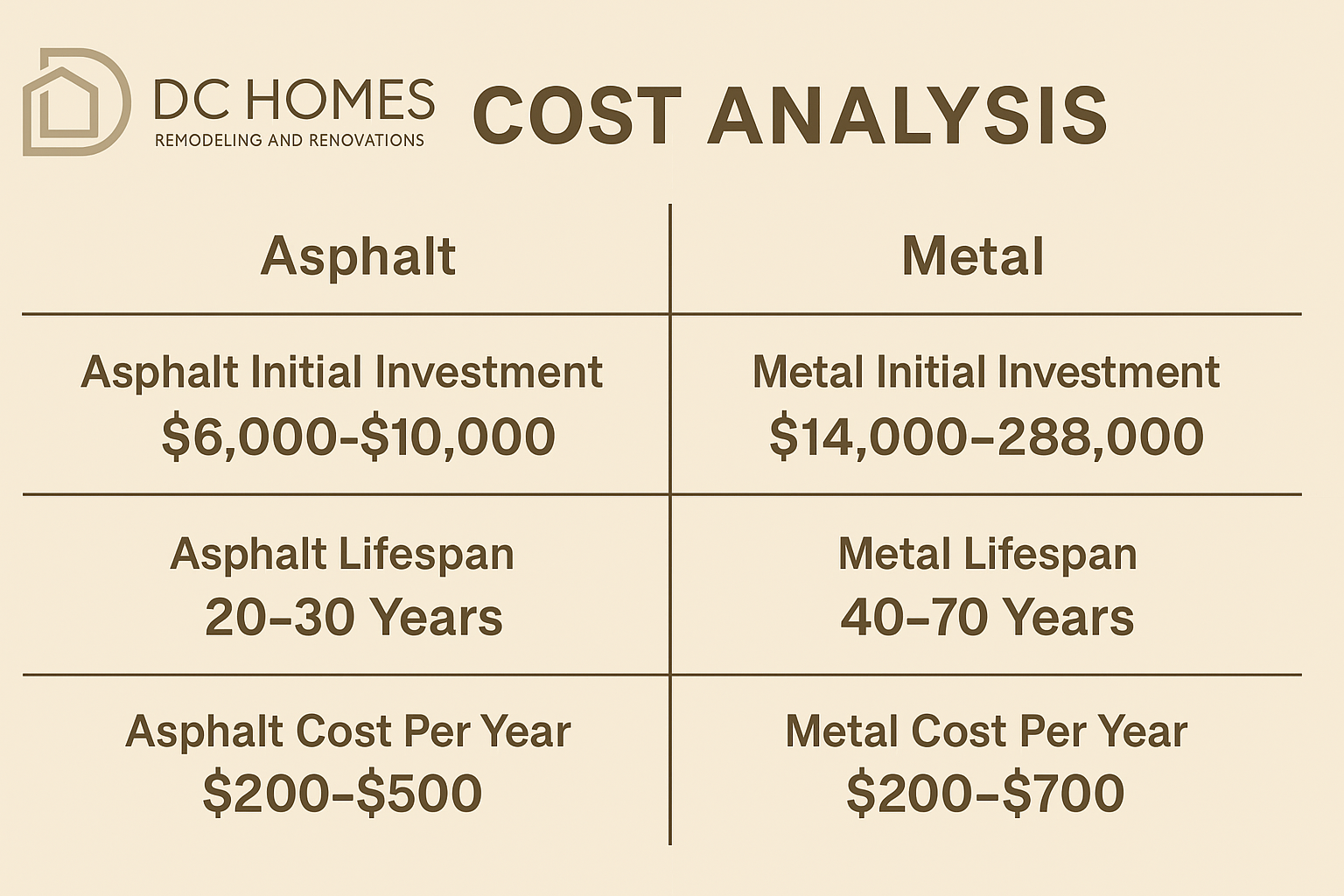
metal roof tiles
  • Asphalt initial investment: $6,000-$10,000
  • Metal initial investment: $14,000-$28,000
  • Asphalt lifespan: 20-30 years
  • Metal lifespan: 40-70 years
  • Asphalt cost per year: $200-$500
  • Metal cost per year: $200-$700

Energy Efficiency

  • Metal reduces cooling costs by 10-25%
  • Asphalt provides standard insulation benefits
  • Metal may qualify for tax incentives
  • Payback period for metal: 10-20 years depending on energy prices

Maintenance Requirements

  • Asphalt needs inspection every 2-3 years
  • Metal requires minimal maintenance beyond debris removal
  • Both need gutter cleaning and ventilation checks
  • Asphalt repairs are cheaper but more frequent

Resale Value Impact

  • Quality asphalt adds 5-10% to home value
  • Metal roofs can add 10-15% to home value
  • Buyer perception varies by neighborhood
  • Metal appeals to eco-conscious and long-term-minded buyers

Who Should Choose What?

Pick metal if you’re planning to stay in your home 15+ years, want maximum energy efficiency, and have the upfront budget. Metal makes sense for investors focused on long-term rental properties where durability trumps initial cost.

Choose asphalt if you need a roof now on a tight budget, might sell within 10 years, or want to match your neighborhood aesthetic. Asphalt works great for families who need to spread renovation dollars across multiple projects.

Retirees aging in place should consider metal. You won’t need another roof replacement, and the energy savings compound over decades. Growing families often prefer asphalt because it frees up cash for other pressing needs like kitchen updates or additional bathrooms.

FAQs About Metal Roof Tiles vs. Asphalt Shingles

1. How long do metal roof tiles and asphalt shingles really last?

Metal roofs last 40-70 years with minimal maintenance. Premium asphalt shingles last 25-30 years if installed properly with good ventilation. Basic three-tab asphalt might only give you 15-20 years. Climate matters too. Ohio’s humidity and temperature swings are tougher on asphalt than metal.

2. Are metal roof tiles noisier during rain or hail?

No, not with proper installation. The noise myth comes from old barn roofs with no underlayment. Modern metal roofs installed over solid sheathing with insulation are actually quieter than asphalt. You might hear slightly more during heavy hail, but it’s not the drumming people imagine.

3. Which roofing option is better for energy efficiency in Ohio’s climate?

Metal wins hands down. Reflective coatings reduce heat absorption by up to 70%, cutting AC costs significantly during Columbus summers. Asphalt absorbs heat, making your attic hotter and your AC work harder. The difference shows up every month on your electric bill.

4. Is one roofing material easier or more expensive to repair?

Asphalt is cheaper and easier to repair. Any roofer can replace damaged shingles for $200-500. Metal repairs require specialized knowledge and matching materials. Small dents often don’t need fixing, but major damage costs more to address. Factor this into your decision if you have large trees nearby.

5. Can I switch from asphalt shingles to metal roof tiles without major structural changes?

Usually yes. Metal is lighter than asphalt, so structural support isn’t an issue. Your roofer will remove old shingles, inspect and repair the deck, and install new metal over proper underlayment. The process takes longer than asphalt replacement but doesn’t require structural modifications for most homes.

Why DC Homes Is the Smart Choice in Columbus

You’ve got the information. Now you need someone who knows Columbus homes inside and out to help you make the right call.

DC Homes brings decades of local experience to every project. We know Ohio weather. We know Columbus building codes. We know which products hold up and which ones fail after a few years.

Our team walks you through every option without pressure or sales gimmicks. We provide transparent pricing upfront, no surprises. You’ll know exactly what you’re getting and what it costs before we start.

We handle everything: permits, material delivery, installation by licensed craftsmen, inspection, and cleanup. You get a warranty that actually means something, backed by a local company that’ll be here when you need us.

Getting started is simple. Schedule a free consultation. We’ll inspect your current roof, discuss your goals and budget, and provide honest recommendations. Whether you choose metal roof tiles or asphalt shingles, you’ll have confidence in your decision.

Make the Right Call for Your Roof

Your roof protects everything you’ve built. Choose based on your budget, how long you’ll stay in your home, and what matters most to you.

Metal offers unmatched longevity and energy savings if you can handle the upfront cost. Asphalt delivers proven performance at a price that won’t empty your savings account.

Both options work. The “right” answer depends entirely on your situation.

Ready to upgrade? Let’s talk roofing today. Schedule your free consultation with DC Homes and get expert guidance from people who know Columbus homes.

10 Genius Small Kitchen Shelf Ideas to Maximize Your Space

Practical, stylish, and space-smart small kitchen shelf ideas engineered to unlock vertical space, kill clutter, and make a compact kitchen feel custom-built for daily life.

Why Shelves Win in Small Kitchens

Your Columbus kitchen feels cramped. Counters disappear under appliances and mail. Cabinet space maxed out years ago. You’re considering a full gut renovation because you assume that’s the only solution, but smart small kitchen shelving transforms tight spaces without the six-figure price tag of tearing down walls.

Shelving unlocks vertical real estate that standard cabinets miss, creating storage without consuming precious floor space. When every square inch counts, thinking upward rather than outward changes everything. Open shelving kitchen ideas keep sightlines clear, making small rooms feel larger and lighter while keeping daily-use items within easy reach.

The bottom-of-funnel reality for Columbus homeowners? Pairing shelf upgrades with strategic cabinet refreshes delivers maximum capacity and resale appeal. This combination approach costs less than full renovations while solving the storage crisis that’s been frustrating you for years.

1. Floating Shelves That Feel Built-In

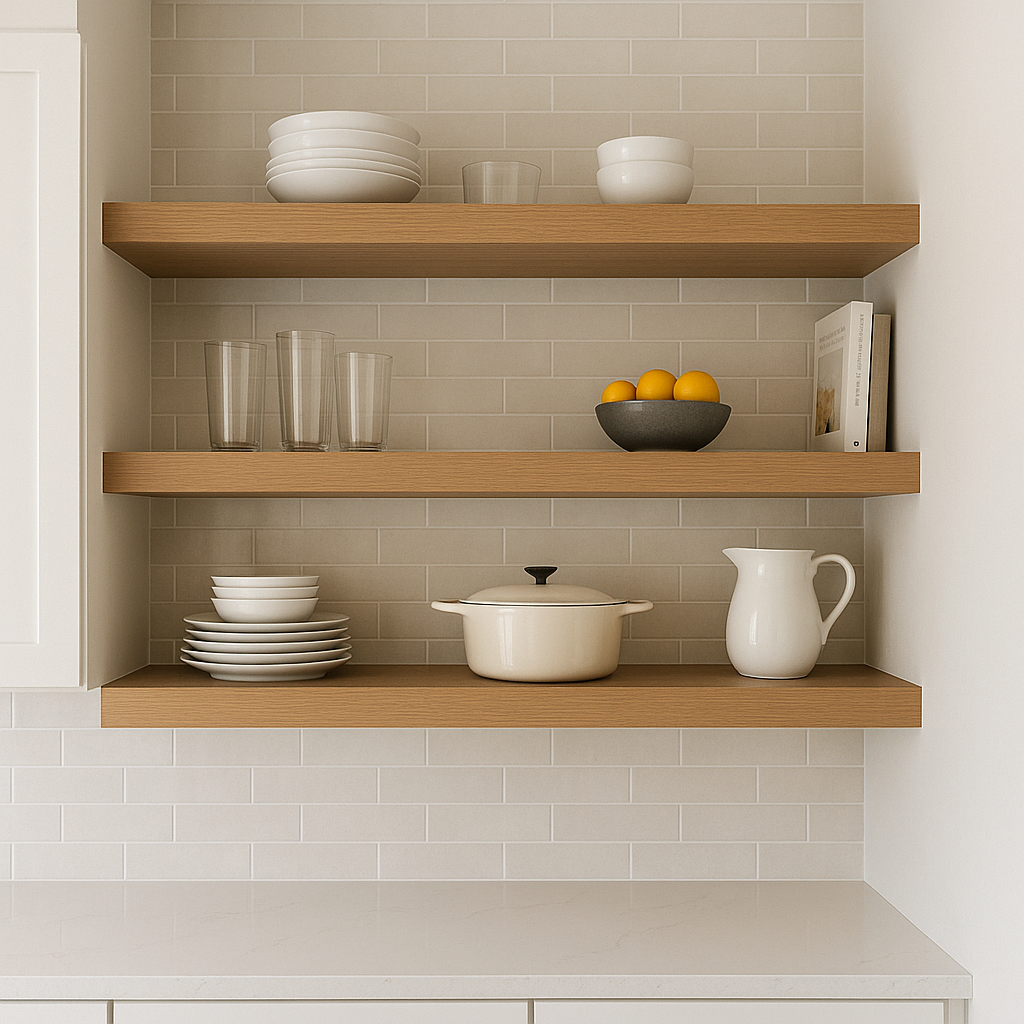
floating shelves

Floating shelves installations add airy storage and display opportunities, ideal above counters or between upper cabinets to reduce visual bulk. The clean lines create modern sophistication while providing genuine functionality for dishes, glassware, and cookbooks that deserve better than being hidden behind closed doors.

Thick wood planks or hidden brackets create a seamless look supporting substantial weight safely. Quality installation matters enormously here; poorly mounted floating shelves become safety hazards when loaded with ceramic dishes or cast iron cookware.

The genius move? Extend shelves to the ceiling, creating a custom, floor-to-ceiling effect without full cabinetry costs. This visual trick makes ceilings feel higher while capturing storage space most kitchens waste entirely.

2. Corner Kitchen Shelves That Conquer Dead Zones

corner kitchen shelves

Corner kitchen shelves convert awkward angles into functional storage for spices, mugs, or small appliances that currently crowd your limited counter space. Wraparound or stacked corner designs transform these typically wasted zones into hardworking storage that’s actually accessible.

The strategic advantage of corner shelving extends beyond basic storage. These installations free prime counter real estate for food prep and cooking while keeping essentials within arm’s reach. Columbus kitchens, particularly in older homes with challenging layouts, benefit enormously from maximizing every available inch.

Add under-shelf hooks for mugs or utensils to multiply vertical storage per linear inch. This layering approach extracts maximum utility from minimal footprint, the holy grail of small kitchen design.

3. Pull-Out Pantry Shelves in Slim Gaps

Pull-out pantry shelves slide into tight spaces beside refrigerators or between wall studs, turning unused inches into organized pantry real estate. These narrow vertical installations minimize digging through deep cabinets while maximizing visibility of cans, spices, and snacks for faster cooking flow.

This represents a high-impact, low-footprint upgrade perfect for Columbus kitchens with standard alcoves or awkward gaps that currently collect dust and lost items. The pull-out mechanism means nothing gets forgotten in back corners, reducing food waste while improving meal prep efficiency.

Installation in existing gaps requires precise measurements and quality hardware. Done right, these shelves feel like they were always part of the original kitchen design.

4. Over-the-Sink Shelves for Daily Essentials

A suspended or wall-mounted shelf above your sink holds soaps, drying gear, and cups while keeping counters clear. Designs with open bases can double as drying racks that drip directly into the sink for efficient cleanup without cluttering your limited counter space.

This zones cleaning and dishes in one compact vertical station that feels intentional and modern. The organizational psychology works beautifully; containing all dish-related items in one defined area creates mental clarity alongside physical efficiency.

For Columbus homes with windows above sinks, designs incorporating the window frame maintain natural light while adding function to previously unused vertical space.

5. Island and Bench Shelving for Dual Duty

Integrating open cubbies into islands or peninsulas stores cookbooks, bowls, and small appliances within arm’s reach without crowding walls. Bench shelving adds storage capacity without consuming wall space, ideal for galley layouts or eat-in corners where every surface serves multiple purposes.

Adjustable shelves future-proof the space as needs evolve:

  • Kids’ snack stations during family years
  • Hosting gear when entertaining becomes priority
  • Appliance storage as cooking styles change
  • Display opportunities for decorative items
  • Wine storage for developing collections

This flexibility matters tremendously in homes you plan to occupy for decades, adapting gracefully as life circumstances shift.

6. Dish Display Shelves with Plate Grooves

Grooved shelves keep plates upright and accessible while doubling as decorative features in tight kitchens. The vertical storage method consumes far less depth than traditional stacking, crucial when working with shallow walls or limited clearance.

Combine grooved plate shelves with shallow rails securing dishes while preserving the open-shelf aesthetic. Pair with glassware shelves to create compact coffee or breakfast stations that feel boutique hotel chic rather than cramped apartment desperate.

This approach works particularly well for Columbus homeowners with beautiful dish collections currently hidden in cabinets. Why own gorgeous pottery if nobody sees it?

7. Under-Cabinet Storage Solutions

Under-cabinet storage adds racks for stemware and rails for utensils, reclaiming airspace beneath upper cabinets that currently holds nothing but dust. Shelf risers and roll-outs stack items vertically inside existing cabinets, multiplying capacity without requiring full remodels.

Inside-door racks on cabinets store lids, wraps, and spices where they’re easy to grab and return. These simple additions transform existing cabinetry from frustrating Tetris puzzles into organized systems where everything has a logical home.

The beauty of under-cabinet storage upgrades? They deliver substantial improvement without construction disruption. Install them over a weekend and immediately reclaim square footage you’ve been wasting for years.

8. Bookshelf-Style Freestanding Units

Slim bookshelves or freestanding open pantries bring flexible storage to rentals or phased renovations. Adjustable shelving adapts to tall oil bottles, cereal containers, and appliances as your kitchen needs evolve through different life stages.

Place freestanding units near prep zones to reduce steps and streamline daily cooking workflows in small footprints. The mobility advantage means reconfiguring layouts becomes simple rather than requiring contractor involvement for permanent installations.

For Columbus homeowners planning eventual full remodels, quality freestanding pieces serve current needs while moving to other rooms or homes later rather than becoming construction waste.

9. Arched Niche Shelves for Style and Storage

Recessed niches with shelves add architectural character while keeping storage flush, a smart move in tight walkways where protruding shelves create traffic hazards. Arches soften hard kitchen lines and frame decor or serveware without encroaching into limited room space.

This approach gets best executed during remodels, ensuring proper depth and structural support for lasting function. The investment pays dividends through both practical storage and aesthetic elevation that makes your kitchen feel custom and expensive.

Columbus historic homes particularly benefit from arched niches echoing the architectural details common in older construction while providing modern functionality.

10. Tall, Ceiling-High Shelf Runs

Full-height shelf runs or open cabinets create custom built-in looks while maximizing vertical capacity that standard cabinets abandon. Store seasonal or seldom-used items up top with daily gear at eye level for clutter-free counter experiences.

Include matching step stools keeping entire wall installations usable and cohesive with overall design. The floor-to-ceiling approach makes even modest kitchens feel grand through impressive vertical lines that draw eyes upward.

This represents one of the most dramatic small kitchen shelf ideas for visual impact, transforming cramped spaces into airy, well-organized cooking environments through strategic vertical design.

Pro Layout Strategies That Make Shelves Work Harder

Zone shelving by task for muscle-memory efficiency:

  • Coffee station: mugs, beans, filters, sweeteners
  • Baking center: flour, sugar, measuring tools, mixing bowls
  • Cooking zone: oils, spices, utensils, frequently used pots
  • Breakfast area: cereals, bowls, kids’ dishes
  • Entertaining space: serving pieces, wine glasses, cocktail tools

Keep everyday items between waist and eye level, positioning lightweight decor higher to preserve safety and balance. Mix open shelves with select closed cabinets hiding bulk storage while maintaining calm, curated aesthetics that prevent visual overwhelm.

Transform Your Columbus Kitchen with Expert Design and Installation

Getting designer expertise for proportion, alignment, and anchoring means your shelves look intentional while handling real-life loads safely. At DC Homes, we pair shelf upgrades with custom cabinetry, pull-out pantry shelves, and integrated lighting for complete small-kitchen transformations throughout Columbus.

We provide in-home consultations with 3D layouts showing exactly how many cubic feet of storage these small kitchen shelf ideas will add to your space. Our measured designs display vertical capacity gains per wall, validating your investment with concrete data rather than vague promises.

We offer phased plans starting with open shelving upgrades, then layering in pull-outs, lighting, and island cubbies over time. This approach fits real budgets while delivering immediate improvement you’ll enjoy daily.

Contact DC Homes today to lock in your timeline, budget, and storage plan tailored specifically to Columbus lifestyles and Ohio seasons.

How These 10 Most Popular Granite Colors Are Changing Home Design Forever

Explore the granite colors redefining home design and learn how to choose the perfect look that elevates style while adding lasting value.

10 Most Popular Granite Colors in Columbus OH

Granite Colors: Not What It Seems

Walk into any stunning kitchen in Columbus, and chances are you’ll find yourself drawn to the countertops first. The 10 most popular granite colors aren’t dominating home design by accident. They represent years of homeowner preferences, design evolution, and the perfect intersection of beauty and functionality.

Your countertop choice impacts everything from your daily cooking experience to your home’s resale value. This single decision influences how your space feels when you’re making morning coffee, how impressive your kitchen looks during dinner parties, and what potential buyers will pay for your home years from now.

The right granite color creates a foundation that ties together your entire design vision. The wrong choice? You’ll be looking at outdated surfaces every single day, knowing you could have made a better investment.

The Emotional and Financial Impact of Choosing the Right Granite Color

Picture this: You’ve just invested thousands in a kitchen remodel, but six months later, that trendy granite color you chose already feels dated. Or worse, you went with the cheapest option and now the surface looks cheap, dragging down the entire room’s appeal.

The agitation builds when you realize how much money you’ve locked into a permanent surface that doesn’t deliver the wow factor you expected. Potential buyers walk through during showings and their faces tell the story before they even speak. Your kitchen becomes a negotiation point rather than a selling point.

Granite countertop color trends matter because they directly impact both your daily enjoyment and your home’s market value. Columbus real estate data consistently shows that kitchen and bathroom upgrades return 70 to 80 percent of their investment at resale, but only when executed with quality materials and timeless design choices.

The solution lies in understanding which colors have staying power and which will date your home faster than outdated light fixtures. Granite countertop durability combined with the right color choice creates surfaces that look stunning for decades while requiring minimal maintenance.

Introducing the 10 Most Popular Granite Colors Taking Columbus by Storm

White Pearl Granite: The Bright Foundation for Modern Living

White Pearl Granite tops the list for good reason. This luminous stone features creamy white backgrounds with subtle gray veining that catches light beautifully, creating an almost ethereal glow in your kitchen or bathroom. The delicate movement throughout the stone adds visual interest without overwhelming your space or competing with other design elements.

Columbus homeowners love how it brightens spaces during those gray Ohio winters while maintaining elegance year-round. The neutral palette serves as a perfect foundation for both bold and subtle design choices, allowing you to change cabinet hardware, paint colors, or decorative elements without worrying about clashing with your countertops.

See why homeowners rave about how this color makes smaller kitchens feel spacious and airy. The light-reflective properties create an optical illusion of additional square footage, making it particularly valuable for Columbus homes with compact kitchen layouts. This choice consistently increases home value while providing a timeless backdrop for daily living.

Absolute Black Granite: Bold Sophistication That Never Ages

Absolute Black Granite delivers the drama that modern design demands. This deep, consistent black provides the perfect canvas for stainless steel appliances and creates striking contrast with white cabinetry. The uniformity of color makes it one of the most predictable granite choices, eliminating concerns about variation between slabs.

The polished surface reflects light in ways that prevent the color from feeling heavy or oppressive. Instead, it adds depth and grounding to kitchens that might otherwise feel too bright or sterile. Columbus homeowners particularly appreciate how this choice hides water spots and minor stains that would be visible on lighter surfaces.

The secret to a timeless kitchen is choosing a bold anchor like Absolute Black that never goes out of style. This granite transcends trends because it works equally well in ultra-modern lofts, traditional colonials, and everything in between. The investment pays dividends through decades of enduring appeal.

Steel Grey Granite: The Perfect Balance of Practicality and Style

Steel Grey Granite bridges the gap between warm and cool tones with sophisticated charcoal backgrounds and lighter speckling that creates subtle movement throughout the surface. The color variation provides just enough visual interest to avoid monotony while maintaining a cohesive, polished appearance.

Transform your space with this versatile option that works equally well in contemporary and traditional settings. The neutral tone complements virtually any cabinet color, from crisp whites to rich woods, making it ideal for homeowners who like to update their spaces periodically without replacing expensive countertops.

Columbus homeowners appreciate how it hides minor spills and daily wear while maintaining its polished appearance. The speckled pattern camouflages everything from coffee rings to sauce splatters, making it exceptionally practical for busy families. This forgiving nature doesn’t compromise sophistication, delivering both beauty and functionality.

Tan Brown Granite: Organic Warmth for Inviting Spaces

Tan Brown Granite brings warmth through rich chocolate browns mixed with gold and black mineral deposits that create mesmerizing depth and texture. The complex coloration means no two slabs look exactly alike, giving your kitchen a truly custom appearance that can’t be replicated.

This option became a favorite among kitchen granite colors because it pairs beautifully with both light and dark cabinetry while adding organic texture that softens hard edges and industrial elements. The warm tones create welcoming environments perfect for family gatherings and entertaining guests.

Columbus homes with oak or cherry cabinetry find this granite particularly complementary, as the color harmonizes with wood grains rather than competing with them. The durability matches the aesthetic appeal, maintaining its rich appearance through years of daily use without requiring intensive maintenance.

Blue Dunes Granite: Unexpected Elegance for Statement Spaces

Blue Dunes Granite offers something unexpected with its blue-gray base and dramatic veining patterns that flow across the surface like waves frozen in stone. The unique coloration adds personality and distinction to spaces that might otherwise feel generic or builder-grade.

For bathroom granite colors, this choice creates spa-like atmospheres that feel luxurious and calming. The cool tones evoke water and sky, transforming ordinary bathrooms into retreat spaces where you actually want to spend time. The dramatic veining serves as artwork, eliminating the need for additional wall decorations.

Each slab tells a different story through its unique veining, making selection an exciting part of the remodeling process. Columbus homeowners who choose Blue Dunes often build their entire bathroom or kitchen design around the granite, allowing its natural beauty to drive color and material choices throughout the space.

Colonial Gold Granite: Classic Beauty for Traditional Homes

Colonial Gold Granite features warm beige backgrounds with gold and brown movement throughout that captures the richness of traditional design while maintaining enough neutrality for modern updates. The subtle sparkle from mineral deposits catches light without appearing flashy or overdone.

This option particularly resonates with Columbus homeowners who want classic elegance that complements traditional architectural styles common in established neighborhoods like German Village and Clintonville. The warm tones harmonize with the brick exteriors and hardwood floors typical of these historic areas.

The timeless appeal ensures your remodel won’t look dated in five years, protecting your investment while delivering daily visual satisfaction. Colonial Gold works beautifully with both antique brass and modern chrome fixtures, demonstrating the versatility that makes it perpetually popular.

Uba Tuba Granite: Rich Depth for Distinctive Kitchens

Uba Tuba Granite combines deep green backgrounds with gold and white speckling, creating depth and interest without overwhelming spaces. The dark base color provides dramatic impact while the lighter speckling prevents the surface from feeling too heavy or cave-like.

The darker tones make it forgiving for busy families while still delivering visual impact that impresses guests and potential buyers. Crumbs, water spots, and cooking splatters virtually disappear against the varied surface, reducing the stress of maintaining pristine countertops between deep cleanings.

Columbus kitchens with maple or hickory cabinetry find Uba Tuba particularly striking, as the green undertones complement the warm wood grains. The sophisticated color palette elevates standard kitchen layouts into spaces that feel custom and carefully curated.

Santa Cecilia Granite: Golden Warmth for Gathering Spaces

Santa Cecilia Granite showcases golden backgrounds with burgundy and black mineral deposits that create a tapestry of warm, inviting colors. The predominant gold tones radiate warmth that makes kitchens feel like the heart of the home rather than just functional workspaces.

This warm option creates welcoming spaces perfect for Columbus homes where the kitchen serves as the family gathering spot. The color palette complements everything from morning coffee to evening wine, maintaining its appeal throughout different lighting conditions and times of day.

The burgundy accents add depth without requiring matching throughout the rest of your kitchen, giving you flexibility in backsplash and paint choices. Santa Cecilia’s enduring popularity speaks to its ability to satisfy homeowners who want both beauty and practicality in their everyday surfaces.

Kashmir White Granite: Subtle Movement for Versatile Design

Kashmir White Granite offers creamy backgrounds with burgundy and gray speckling that adds movement without busy patterns that might clash with other design elements. The soft coloration works as a neutral while providing more visual interest than solid white alternatives.

Transform your space with this balanced option that works across multiple design styles, from farmhouse charm to contemporary minimalism. The versatility makes it particularly valuable for homeowners who anticipate changing their aesthetic preferences over the years without wanting to replace expensive countertops.

Columbus homes appreciate how Kashmir White brightens spaces without the stark brightness of pure white granite. The subtle speckling creates texture that’s visible up close but reads as a cohesive color from normal viewing distances, providing the best of both detailed and unified appearance.

Black Galaxy Granite: Celestial Drama for Bold Statements

Black Galaxy Granite features deep black backgrounds studded with gold and copper specks that sparkle like stars scattered across a night sky. The metallic inclusions catch and reflect light, creating a dynamic surface that changes appearance based on lighting conditions and viewing angles.

This dramatic choice makes bold statements in both kitchens and bathrooms while maintaining sophistication that prevents it from feeling gimmicky or trendy. The wow factor delivers immediate impact that transforms ordinary rooms into showcase spaces worthy of magazine features.

Columbus homeowners who choose Black Galaxy often find it becomes the conversation piece of their home, with guests inevitably commenting on the stunning countertops. The investment in this distinctive granite pays dividends through both personal enjoyment and impressive resale appeal that helps homes stand out in competitive markets.

How These Granite Colors Work With Columbus Living and Design Trends

Ohio’s weather demands materials that can handle temperature fluctuations without cracking or showing wear. Granite remodeling projects succeed because granite naturally handles the moisture and temperature changes that Ohio basements and kitchens experience throughout the year.

Seasonal light changes in Columbus homes create another consideration. Summers bring bright natural light that can wash out certain colors, while winters demand surfaces that don’t feel cold and dreary. The 10 most popular granite colors all handle these shifts gracefully, maintaining their appeal regardless of season.

Granite color combinations become crucial when coordinating with other design elements:

  • White and light granite pairs beautifully with dark walnut or espresso cabinetry popular in Columbus renovations
  • Dark granite creates stunning contrast against white shaker cabinets that dominate current trends
  • Mid-tone granite offers flexibility for homeowners who want options in future cabinet or paint updates
  • Veined granite adds movement that complements the clean lines of modern hardware and fixtures
  • Speckled granite provides visual interest that reduces the need for elaborate backsplashes

Energy-efficient LED lighting has changed how homeowners experience granite colors. Under-cabinet lighting brings out the depth and sparkle in darker granites, while pendant lights showcase the subtle veining in lighter options. Columbus remodelers increasingly design lighting plans specifically around countertop choices.

Imagine walking into your newly remodeled kitchen on a Saturday morning. Sunlight streams through your windows, hitting your carefully selected granite countertops. The color you chose makes your cabinets look richer, your appliances more premium, and the entire space feel like something from a design magazine. That’s the power of making the right granite choice.

Why Professional Installation Makes All the Difference

You’ve seen the horror stories. Homeowners who tried to save money by hiring inexperienced contractors end up with uneven seams, poor support causing cracks, or granite colors that looked nothing like the samples. The frustration builds as delays push your project weeks or months past schedule.

Budget overruns become another nightmare when contractors discover “unexpected issues” halfway through installation. Suddenly your carefully planned investment balloons to unmanageable levels, and you’re stuck choosing between finishing poorly or walking away from money already spent.

Professional granite remodeling services eliminate these headaches through proper planning, accurate measurements, and experienced installation teams who’ve handled hundreds of projects. Expert installers understand how different granite types require different cutting and sealing techniques.

The personalized design consultation process starts by understanding your lifestyle, design preferences, and budget parameters. Experienced professionals help you navigate the overwhelming array of options by narrowing choices to granite colors that actually work for your specific space, lighting conditions, and existing design elements.

Transparency in pricing and timelines removes the anxiety that plagues many renovation projects. When you work with established Columbus remodelers, you receive detailed quotes that account for all aspects of installation, from removal of existing countertops to final sealing and cleanup.

Transform Your Space Starting Today

The 10 most popular granite colors continue dominating Columbus home design because they deliver on multiple levels: aesthetic appeal, functional durability, and strong return on investment. These aren’t temporary trends that will date your home, but proven choices that satisfy homeowners year after year.

Your kitchen or bathroom remodel represents a significant investment in both money and disruption to your daily life. Making the right granite choice from the start saves you from expensive regrets and ensures you’ll love your space for decades to come.

DC Homes brings over a decade of experience transforming Columbus kitchens and bathrooms with expert granite installation. Their design team understands which colors work best for different lighting conditions, cabinet styles, and architectural periods common throughout Columbus neighborhoods.

Book your FREE granite consultation now to explore samples in your actual space, see how different lighting affects various granite colors, and receive expert guidance on which options best fit your vision and budget.

How a Shower Window Can Improve Ventilation and Reduce Mold

Unlock the secret to a fresher, mold-free bathroom by adding a well-placed shower window; your home’s simple upgrade that pays off in comfort and health.

The Hidden Mold Menace Lurking in Your Bathroom

Picture this: you step into your bathroom one morning and notice those telltale dark spots creeping along your grout lines. Maybe there’s a musty smell that never quite goes away, no matter how much you clean. Your beautiful bathroom is becoming a breeding ground for mold, and you’re watching your investment deteriorate right before your eyes.

This scenario plays out in thousands of Columbus homes every year. Poor bathroom ventilation solutions create the perfect storm for mold growth: trapped moisture, inadequate airflow, and surfaces that never truly dry. The result? Costly repairs, potential health issues, and a bathroom that feels more like a swamp than a sanctuary.

The frustration builds when you realize that running exhaust fans constantly drives up your energy bills, yet still doesn’t solve the fundamental problem. You’re stuck in an expensive cycle that threatens both your wallet and your family’s wellbeing. But what if there was a solution hiding in plain sight? A shower window might be the game-changing upgrade your bathroom desperately needs.

Why Proper Ventilation Matters More Than You Think

Moisture control in bathrooms goes far beyond preventing foggy mirrors. When humidity levels consistently exceed 50%, you’re creating an environment where mold spores thrive and multiply rapidly. These microscopic invaders don’t just stay put—they spread through your home’s air system, potentially triggering allergies and respiratory issues for your family.

The structural damage tells an even more concerning story. Excess moisture warps wooden fixtures, deteriorates drywall, and can compromise the integrity of your home’s framework. Insurance claims related to mold damage often reach thousands of dollars, and many policies don’t cover gradual damage from poor ventilation.

Ventilation vs exhaust fans becomes a crucial consideration when you’re fighting this battle. While mechanical fans move air, they rely on electricity and can fail when you need them most. Natural ventilation through windows provides consistent, reliable airflow that works around the clock without adding to your energy bills.

The Transformative Power of Strategic Window Placement

A properly positioned shower window creates natural convection currents that actively pull humid air out of your bathroom while drawing fresh air in. This passive ventilation system works continuously, even when you’re not thinking about it. The physics are simple: warm, moist air rises and escapes through the window opening, while cooler, drier air enters to replace it.

The benefits extend well beyond moisture control. Natural light streaming through your window creates a brighter, more welcoming space that feels larger and more luxurious. Morning routines become more pleasant when you’re not reaching for light switches in a dim, enclosed box. Energy-efficient bathroom upgrades like this reduce your reliance on artificial lighting and mechanical ventilation, cutting monthly utility costs.

Privacy concerns often arise when homeowners consider bathroom windows, but modern solutions offer multiple options:

  • Frosted or textured glass that allows light while maintaining privacy
  • Smart glass technology that can switch from clear to opaque
  • Strategic placement that takes advantage of natural barriers like landscaping
  • Decorative films that add style while obscuring the view
  • Window treatments designed specifically for high-moisture environments

Beyond Mold Prevention: Hidden Value Additions

Custom bathroom windows contribute to your home’s resale value in ways that might surprise you. Real estate appraisers recognize proper ventilation systems as indicators of well-maintained properties. Potential buyers immediately notice bright, fresh-smelling bathrooms, and natural light makes spaces feel more luxurious and spacious.

The energy efficiency benefits compound over time. Reduced reliance on exhaust fans and artificial lighting translates to meaningful savings on monthly utility bills. Over a typical 10-year period, many homeowners save enough on energy costs to offset a significant portion of their window installation investment.

Bathroom remodeling ideas in Ohio must account for the state’s variable climate, from humid summers to dry winters. Windows provide year-round benefits by allowing you to adjust ventilation based on seasonal conditions. Summer months benefit from maximum airflow, while winter ventilation can be controlled to maintain comfortable temperatures while still managing humidity.

Professional Installation Makes All the Difference

Choosing the right partner makes the process clear and efficient. Here is how a shower window project comes together with a pro team focused on fit, finish, and airtight waterproofing.

  • Discovery and design: on site assessment, precise measurements, and sash style recommendations based on your privacy and airflow needs
  • Materials selection: insulated frames, glass options, and hardware finishes that match your tile and fixtures
  • Expert installation: framing, flashing, membrane tie-in, and careful tile integration for a clean look
  • Quality control and education: operation check, caulk cure timelines, and tips for daily use that keep moisture moving out

Investment That Pays for Itself

When you calculate the true cost of persistent mold problems, cleaning products, repeated repairs, potential health issues, and decreased home value, the economics of prevention become compelling. A well-designed window system addresses these issues proactively rather than reactively.

The installation process typically takes one to two days, minimizing disruption to your daily routine. Professional teams work efficiently to remove old fixtures, prepare openings, install windows, and complete finishing work that blends seamlessly with your existing bathroom design.

Many homeowners qualify for energy efficiency rebates or tax credits when installing energy-efficient bathroom upgrades. These incentives can offset initial costs while providing long-term benefits that continue paying dividends for decades.

Transform Your Bathroom Today

Your bathroom should be a retreat, not a source of stress and ongoing maintenance headaches. A strategically placed shower window solves multiple problems with one elegant upgrade: eliminating mold, reducing energy costs, adding natural light, and increasing your home’s value.

The longer you wait to address ventilation issues, the more expensive the eventual solutions become. Mold damage spreads, energy costs accumulate, and your family continues living with suboptimal air quality. Professional installation ensures that your investment delivers maximum benefits while avoiding common pitfalls that can turn upgrades into costly mistakes.

DC Homes specializes in bathroom remodeling ideas in Ohio that work specifically for Columbus climate conditions and homeowner needs. Their consultation process identifies the optimal solutions for your specific situation, and their installation expertise ensures that your shower window delivers the ventilation performance and aesthetic appeal you’re looking for. 

Contact DC Homes today to schedule your consultation and discover how the right window placement can transform your bathroom into the fresh, mold-free sanctuary you deserve.